
Key Takeaways – Advanced Industrial Fiberglass (FRP) Solutions:
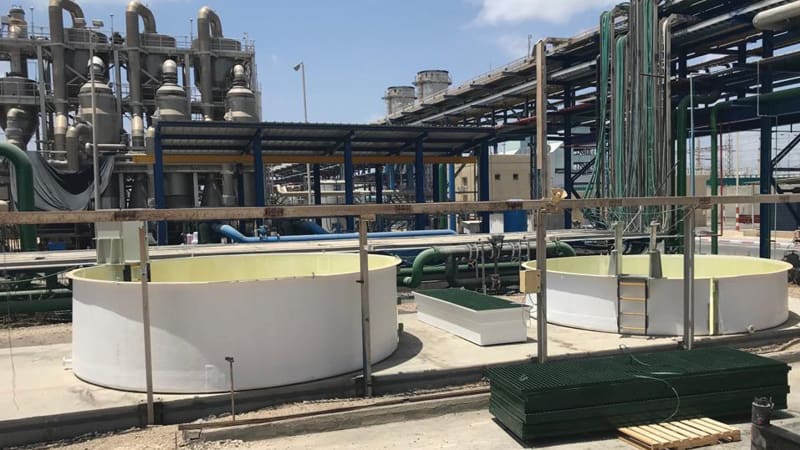
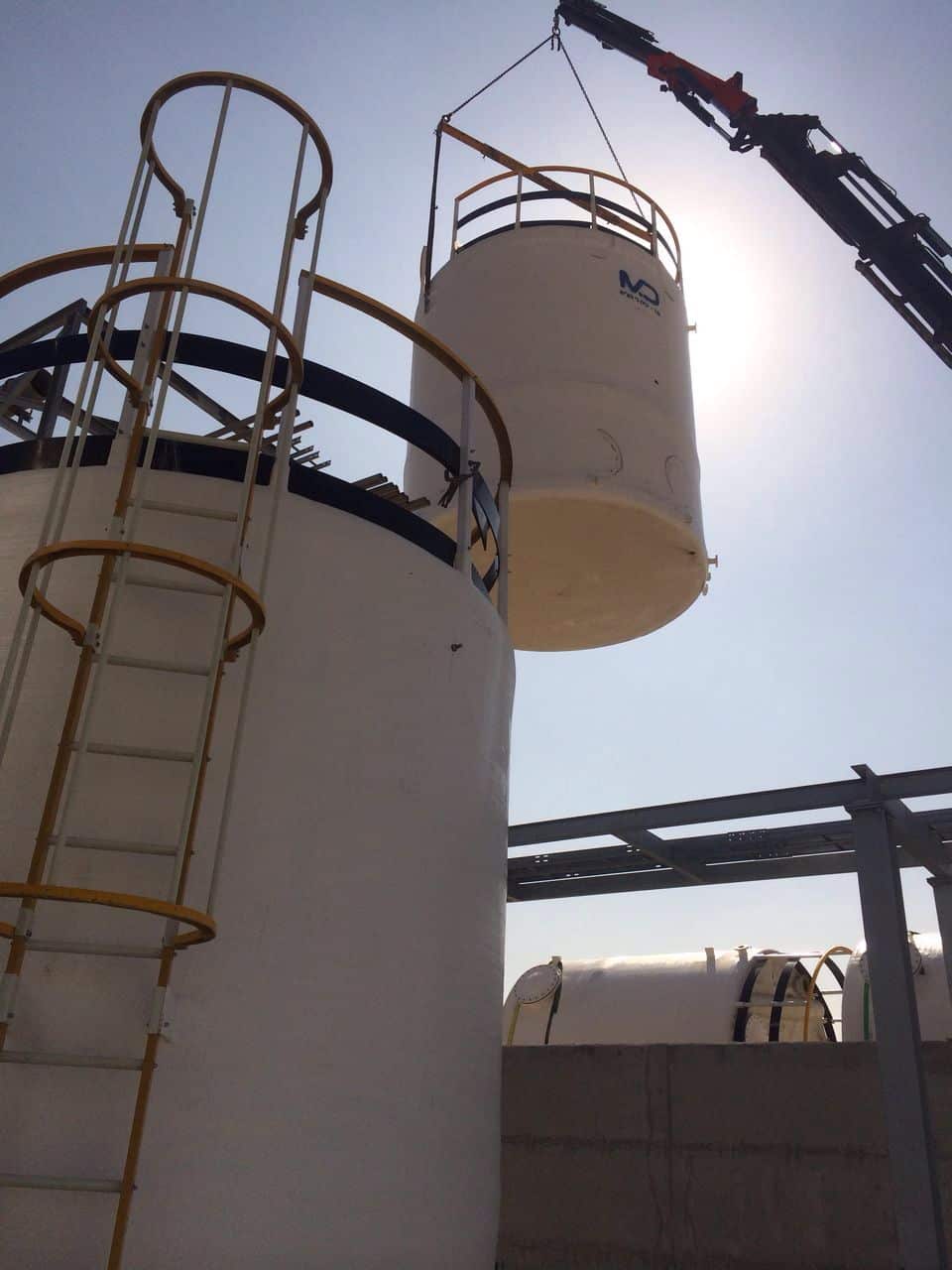
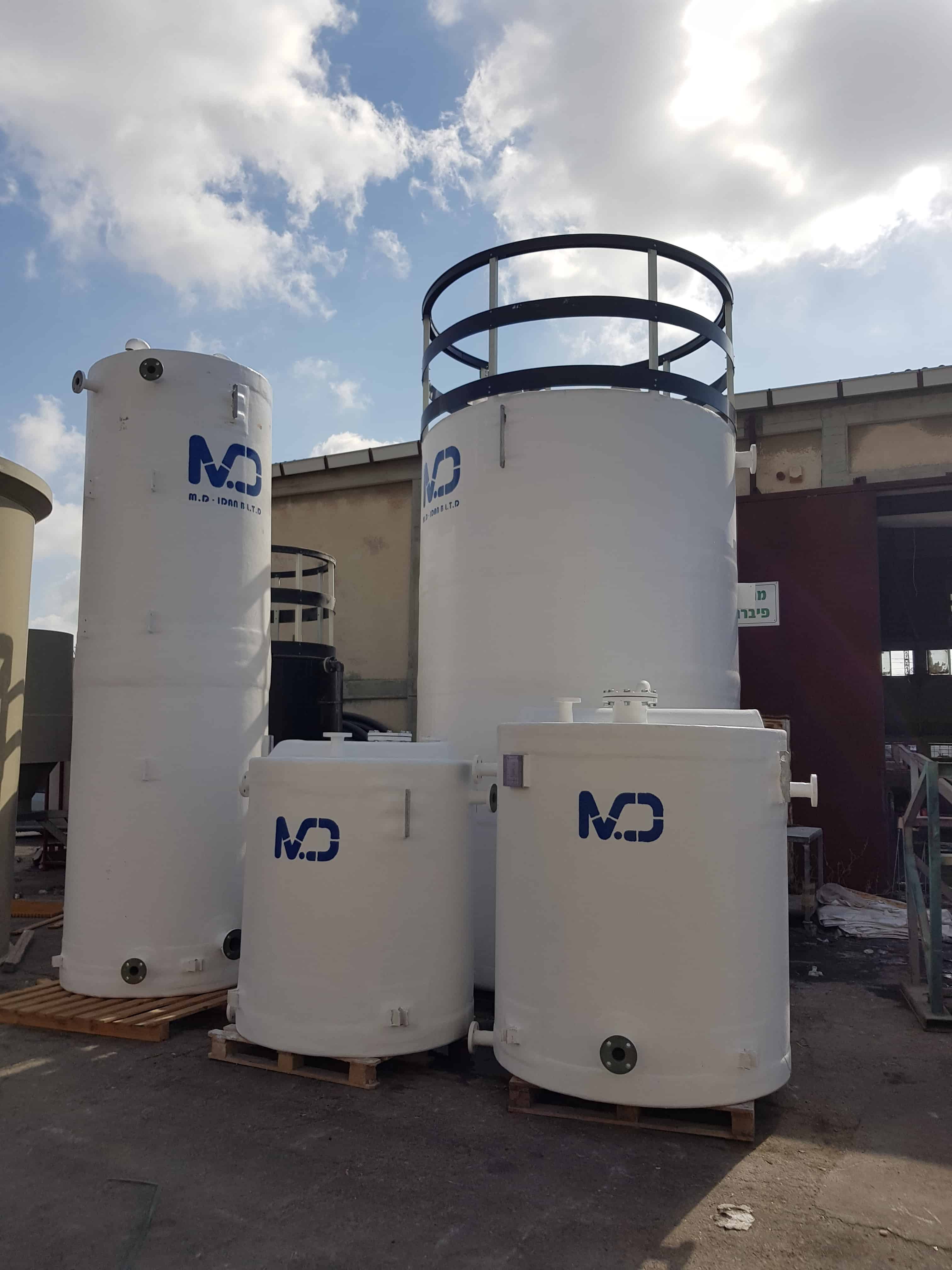
- Custom Engineering & Design: Full customization of FRP tanks (up to dozens of cubic meters), containment basins, bio-filters, and scrubbing systems tailored to specific industrial needs.
- Advanced Resin Systems: Utilization of Isophthalic Polyester, Vinyl Ester, and Epoxy resins to ensure optimal chemical, thermal, and mechanical resistance.
- Manufacturing Technologies: Combining hand lay-up, spray lay-up, and filament winding with in-house custom mold development for high structural integrity.
- On-Site Field Services: Comprehensive installation, structural refurbishment, leak repair, and relining performed directly at customer facilities.
- Regulatory & Quality Standards: Adherence to international engineering guidelines (BS EN 13121, ASME RTP-1, ISO 9001) for maximum operational safety and longevity.
Fiberglass Reinforced Polymer (FRP) has revolutionized modern industrial infrastructure, offering an unmatched strength-to-weight ratio, complete corrosion resistance, and decades of operational reliability. Designed to withstand harsh chemical environments, high hydraulic loads, and extreme weather conditions, engineered FRP composites serve as the backbone for chemical processing, water treatment, aquaculture, and air purification facilities. In this comprehensive guide, we explore advanced fiberglass manufacturing techniques, resin selection criteria, structural mold development, on-site maintenance services, and how custom-engineered FRP solutions deliver long-term value to heavy industry.
Advanced Fiberglass Solutions & Custom Design
Idan B’s Fiberglass Department specializes in the design and manufacture of advanced fiberglass solutions, combining engineering precision, high-quality materials, and full customization to meet the exact requirements of each client and application. We produce fiberglass tanks with volumes of up to several dozen cubic meters, alongside custom-made fiberglass products for a wide range of industrial and environmental uses — from fish ponds and odor neutralization systems to coating lines, containment pallets, bio-filters, and more.Material Selection & Resin Engineering Matrix
The structural longevity and chemical immunity of any fiberglass solution depend heavily on selecting the correct resin matrix and glass reinforcement combination. Below is an engineering overview of the primary resin systems utilized in our manufacturing process:
| Resin Type | Chemical & Thermal Resistance | Key Structural Benefits | Typical Industrial Applications |
|---|---|---|---|
| Isophthalic Polyester | Good resistance to water, mild acids, and industrial wastewater. Temp up to 80°C. | Cost-effective, excellent mechanical strength, versatile fabrication. | Fish farming tanks, municipal water storage, general containment basins. |
| Vinyl Ester (VE) | Exceptional resistance to aggressive acids, alkalis, and oxidizing agents. Temp up to 120°C–150°C. | High fracture toughness, superior fatigue resistance, excellent elongation. | Chemical processing tanks, wet scrubbers, industrial acid containment, plating lines. |
| Epoxy Composite | Superior resistance to solvents, alkalis, and high thermal stress. Temp up to 180°C+. | Maximum structural rigidity, outstanding adhesion, low moisture absorption. | High-pressure vessels, specialized bio-filters, aerospace & energy components. |
| Fire-Retardant Resin | Engineered additives to satisfy Class 1 / Class A flame spread ratings (ASTM E84). | Self-extinguishing properties, low smoke emission during thermal events. | Air ducting systems, underground ductwork, enclosed chemical facilities. |
Manufacturing Techniques & Custom Mold Development
Our manufacturing process integrates manual layering techniques with advanced composite technologies, enabling us to fabricate strong, durable, and corrosion-resistant structures. We also have extensive in-house capabilities for developing custom molds, precisely engineered to match the shape, size, and function required for each project.Advanced Fabrication Technologies:
- Hand Lay-Up & Spray Lay-Up: Ideal for complex geometries, custom fittings, and seamless tank linings, providing precise control over structural resin-to-glass ratios.
- Filament Winding: Automated winding of continuous glass rovings under controlled tension, delivering maximum hoop strength for large vertical and horizontal cylindrical storage tanks.
- Custom Mold Fabrication: CAD/CAM-assisted pattern design and precision mold construction, allowing us to manufacture unique structural shapes, heavy-duty sumps, and modular tank components.
On-Site Installation, Repair & Refurbishment
In addition to production, our experienced field teams carry out installation, repair, and refurbishment works directly at customer sites. Whether it’s upgrading existing systems or performing structural reinforcements, we ensure that every project maintains long-term reliability and operational safety.Field Service Capabilities:
- On-Site Structural Relining: Applying internal FRP laminate barriers to corroded concrete or steel basins, restoring complete fluid containment without requiring total tank replacement.
- Emergency Leak Sealing & Patching: Rapid response laminating repairs using chemical-resistant resin systems to minimize plant downtime.
- Structural Reinforcement & Retrofitting: Adding external stiffening ribs, gussets, and heavy-duty flange connections to existing composite structures.
Industry Leadership & Commitment to Quality
The synergy between our skilled workforce, state-of-the-art equipment, and highly experienced engineering department positions Idan B as one of Israel’s leading companies in the field of industrial fiberglass manufacturing. Our commitment to quality, technical excellence, and customer satisfaction ensures that every product we deliver performs efficiently — even in the most demanding industrial environments.Compliance with International Engineering Standards
Every custom FRP solution engineered by Idan B adheres to rigorous international design codes and manufacturing specifications to guarantee safety and compliance:
- BS EN 13121 / AD 2000 N1: Design and calculation parameters for GRP tanks and vessels for use above ground.
- ASME RTP-1: Reinforced Thermoset Plastic Corrosion Resistant Equipment standards for heavy chemical storage.
- ASTM D3299 & ASTM D4097: Filament-wound and contact-molded glass-fiber-reinforced thermoset resin chemical tanks.
- ISO 9001 Certified Quality Management: Strict quality control procedures covering raw material inspection, laminate thickness verification, and hydrostatic pressure testing.
Frequently Asked Questions About Industrial Fiberglass (FRP)
- Why is fiberglass (FRP) preferred over stainless steel for chemical storage?
FRP is completely immune to galvanic and chemical corrosion caused by harsh acids, bases, and chlorides. Unlike stainless steel, FRP does not require protective coatings, has a significantly longer service life in corrosive environments, and offers a higher strength-to-weight ratio at lower lifecycle costs. - What is the maximum volume capacity for custom FRP tanks manufactured by Idan B?
We manufacture shop-fabricated tanks with volumes reaching up to several dozen cubic meters. For larger containment requirements, our field teams perform modular assembly and joint laminating directly on-site. - How do you determine which resin to use for a specific chemical application?
Resin selection is based on the chemical medium, concentration percentage, operating temperature, and potential thermal shocks. We utilize Vinyl Ester for aggressive acids/solvents, Isophthalic Polyester for general water/wastewater treatment, and specialized Epoxy resins for extreme conditions. - Can existing concrete or steel tanks be lined with fiberglass?
Yes. On-site FRP relining is an extremely effective method to rehabilitate corroded concrete pits, steel vats, or sumps. The seamless glass-reinforced laminate creates a 100% watertight, chemically inert secondary barrier that extends asset life by decades. - What manufacturing processes are used for custom fiberglass shapes?
We combine contact molding (hand lay-up and spray lay-up) for complex geometries and structural fittings, alongside filament winding for high-pressure cylindrical tanks. Our in-house pattern shop develops custom molds tailored to exact project specifications. - How does UV radiation affect outdoor fiberglass structures?
Unprotected resins can undergo surface degradation (fiber blooming) under prolonged UV exposure. Idan B incorporates UV inhibitors directly into the outer resin layer and applies high-grade gelcoats or polyurethane topcoats to ensure 30+ years of weather resistance. - Are Idan B’s fiberglass products suitable for fish farming and aquaculture?
Yes. We fabricate non-toxic, food-grade certified FRP fish tanks, raceways, and biological filtration vessels. The smooth internal finish prevents bio-fouling, protects aquatic life from injury, and simplifies cleaning. - What maintenance is required for industrial FRP tanks and equipment?
FRP requires minimal routine maintenance compared to metal. We recommend periodic visual inspections of internal corrosion barriers, flange seals, and external structural supports, alongside hydrostatic or ultrasonic thickness testing every few years. - How are structural joints and connections sealed in custom FRP installations?
Structural joints are connected using full-penetration butt-and-strap laminating techniques. The joint is built up with layers of chopped strand mat and woven roving impregnated with matching resin, creating a continuous, seamless bond equal in strength to the tank wall. - Is fiberglass fire-resistant?
Standard FRP can burn, but we manufacture fire-retardant composites using specialty halogenated or alumina trihydrate-filled resins that meet Class 1 flame-spread ratings according to ASTM E84 / UL 94 standards. - Can FRP equipment be repaired on-site if damaged mechanically?
Yes. One of the greatest advantages of FRP is its repairability. Damaged areas can be ground down, structural laminates reapplied, and the barrier restored to original structural integrity directly on-site by our field technicians. - How does temperature affect the structural strength of FRP?
As temperature increases, the flexural modulus of composite materials decreases. Our engineering team calculates wall thicknesses and structural stiffeners based on the maximum heat deflection temperature (HDT) of the chosen resin matrix. - What is the typical lifespan of an industrial FRP tank?
When properly engineered, manufactured, and maintained, an industrial fiberglass tank has a design life of 30 to 50+ years, far outlasting traditional metal or unreinforced plastic alternatives. - How do I request a custom mold or specialized FRP product design?
You can contact our engineering department with your project requirements, chemical storage parameters, and dimensional drawings. We provide end-to-end design, FEA analysis, mold fabrication, production, and installation services.

Idan B Plastics Ltd., a member of the Belsky Group
 יוסף בצרי 45, קרית אתא


